Publishing a release
This is the maintainer procedure. Users should follow The full journey and the compatibility guide.
Completed 0.4.4 finalization
The protected procedure below completed for source
46c573d7f808f8d491cde1062d474b145288697f, tag v0.4.4, CI 37222486067
and publisher 37223902790. The release record retains
public hashes, independent receipt/install verification and the separate
Homebrew and external integration qualification boundaries. Do not replay this completed package
publication or replace its archives.
The 0.4.4 release record defines the reviewed policy:
0.4.4 only, from protected master, on the exact final source commit. Complete
PR #247 review and all required checks, merge through the protected squash path,
then require successful push CI, Security and Documentation on that merge SHA.
Record the full SHA, CI run and all eight hashes before creating v0.4.4.
The earlier frozen candidate archives and evidence remain unchanged; retain the
final CI's separately built and fully qualified set in a distinct directory.
The coordinated verifier also requires successful provenance and release-assets
jobs for 0.4.4. PR/manual runs, other refs, an unprotected source and incomplete
qualification cannot authorize it. Keep all existing signature, branch, tag,
coverage and protected pypi receipt/publication checks. Use the manual workflow
with the selected tag and CI run; publish the original bytes, compare public
hashes and verify fresh installations outside checkout before declaring success.
Stage verified release assets without the preview flag only on a protected
0.4.4 master push. This does not itself publish anything. Publish the matching
MCP Registry descriptor separately after the package/release verification, with
explicit immutable tag and full source SHA inputs. Regenerate the official
Homebrew tap from the immutable final core sdist and signed master provenance;
complete its own reviewed audit and real Apple Silicon installation before
merging the tap update.
Current published baseline
The current stable release is 0.4.4 for the core and all three plugins,
source 46c573d7f808f8d491cde1062d474b145288697f. Publication is complete.
The original archives from protected master CI 37222486067 were published
by workflow 37223902790; all eight public files match the qualified bytes.
See the release record. Master integration and documentation
commits preserve the released product but never replace its immutable source.
Documentation maintenance targets master.
The 0.4.1rc1 and 0.4.0rc1 prereleases remain immutable history. The earlier core-only 0.4.0 upload was incomplete and removed; no coordinated final 0.4.0 exists. RC2 NOT REQUIRED: the 0.4.1 finalization changed versions and documentation without changing runtime behavior, and the final archives were independently qualified and publicly verified.
The immutable v0.4.2rc1 prerelease was published and verified from
e8bd1166eff98a3766ec586c6a36c2f58ac14853; publication #231 is complete.
Corrective 0.4.2rc2 was qualified at
3e58c7969129e368a21f8188b12c94ab3059b421 after the first final qualification
exposed a worker-pipe cleanup failure. PR #234 fixes pipe closure on cleanup errors.
Final 0.4.2 is published with no runtime or third-party dependency change from
that qualified RC2. Tracking #232 retains the failed run, corrective qualification,
exact final source and verified publication evidence.
See the 0.4.2 release record.
Completed 0.4.3 qualification
The coordinated 0.4.3 core and all three plugins are published and verified. The release record identifies the exact protected source, successful qualification and publication runs, and public-byte comparison. The original four wheels, four sdists, target exports, delivery evidence and signed provenance remain immutable. Do not replay qualification or package publication for this completed release. PR builds remain previews.
Official MCP Registry publication is independent of the package workflow.
The completed 0.4.3 directory publication used Publish MCP Registry with
v0.4.3 and its recorded source SHA. The workflow verifies the public release and matching
server.json, then authenticates with the repository's GitHub Actions OIDC
identity. The public PyPI launcher and package ownership marker have passed
validation. No personal token or rebuild is required.
Retain and publish one coordinated artifact set
CI builds four wheels and four sdists once per candidate. Independent sdist
reconstructions are tests and never replace the selected archives. Retain
release-candidate, the six release-target-* exports, release-delivery,
build-attestations and release-assets. The latter is only an Actions artifact,
not an automatic upload to a GitHub release. PR previews lack signed provenance
and cannot authorize publication.
The completed 0.4.1 qualification selected the successful protected release/0.4.1 push run on the exact source commit, plus successful Security and Documentation runs on that same branch and commit. The signer recorded that protected ref in the retained evidence. The old branch can be retired without changing that evidence identity.
The publication verifier adds only 0.4.4 from protected master; the historical
0.4.3 / release/0.4.3 policy remains unchanged and must not be replayed.
Unintended versions and refs are refused. Development builds alone do not
authorize publication. Releases through 0.4.0rc1 retain master provenance; published
0.4.1 retains refs/heads/release/0.4.1 provenance.
Qualification includes Linux CPython 3.11–3.14, macOS 3.11/3.14 and disposable registry/TSA/ORAS fixtures. Target reports record architecture, patch version, bytes and timing samples. Runtime SBOM attestations cover the core distributions; plugin dependency identities remain in target inventories. Disposable worker image identities are test evidence, not official published images.
Publication stays manual and requires explicit authorization of the exact
version, source, CI run and original hashes. Trusted Publishing must be configured
for all four projects. The workflow uploads core → OCI → MCP → Attest,
requires separate protected receipt/publication approvals, and compares downloaded
public archives with the original eight files. Existing bytes must match exactly;
missing files alone are staged. No rebuild, overwrite or skip-existing is allowed.
Network/access errors never mean absence. Verify fresh public installations and
retain the public comparison and signed timestamped receipt before declaring delivery.
For first-time plugin publishers, PyPI allows only one pending publisher for an
identical repository/workflow/environment configuration. Register and publish one
package at a time using the exact package input, then finish with package: all
to archive release-wide evidence. These prerequisites do not authorize a new upload.
Completed 0.4.0rc1, 0.4.1rc1, 0.4.1, 0.4.2rc1, 0.4.2 and 0.4.3 deliveries must not be dispatched again.
Published 0.3.0
0.3.0 was published on 22 September 2026 from commit
43f5626fe9e26b018aa323abd83b9611f7b2aba9, tagged v0.3.0.
Publication reused the exact master CI 35735875051 distributions. The managed
receipt and Trusted Publishing workflow passed; public PyPI bytes were compared
with the CI files. See the release record and hashes.
Keep this tag and its distributions unchanged. The protected procedure below applies
to a future explicitly authorized release.
Published releases and verification builds
0.2.0 was published on 21 September 2026, from commit
31997407010d6e38f99970d0b3b319135a0d5d15, tagged v0.2.0.
Keep that tag and its PyPI/GitHub distributions unchanged. See the
release notes for the shipped scope.
The later commits that still declared 0.2.0 produced verification artifacts:
sharing a version number did not make them the published files, and they must
not replace those files. 0.2.1 was published on 21 September 2026, from
8ab471de436b1ca92a3b213c40402c5241926d5a, tagged v0.2.1.
Its maintenance notes record the verified delivery and
signed timestamped receipt. Keep its tag and distributions unchanged too. Build attestations
apply only to their exact subjects and source commit.
The procedure below is for a future explicitly authorized release. Prepare each new version through a separate release PR; version metadata alone does not mean publication has occurred. Published historical versions remain immutable. Recovery of a partial coordinated publication requires the original approved archives and exact comparison; it never permits replacing public bytes.
Ownership and one-time setup
Verify Owner access to the existing outerspace-apizr PyPI project. Do not
rename/recreate it because an organization was removed; individual project
permissions and organization membership are separate.
Configure a PyPI Trusted Publisher for the existing project, with these exact fields:
| Field | Value |
|---|---|
| GitHub owner | Alien6-Studio |
| Repository | outerspace-apizr |
| Workflow filename | publish-pypi.yml |
| Environment | pypi |
The GitHub pypi environment must require maintainer review and allow only release
tags matching v*. Publishing uses OIDC, not a stored PyPI token. A workflow file
alone does not establish PyPI ownership or configure this trust relationship;
verify the publisher in PyPI before dispatching. TestPyPI is a separate service
and publisher and is not part of this workflow.
Release procedure
The steps below record the completed 0.4.1 procedure and its original source
line. Do not replay publication after retiring that branch. Qualification and
publication of 0.4.2 use the reviewed release/0.4.2 version/ref policy;
creating a branch alone does not authorize publication.
- Prepare a PR with current README, release notes, compatibility guidance and package
metadata.
pyproject.tomlis the version source; installed application/CLI versions come from distribution metadata. Use the explicitly authorized, previously unpublished version; align its release notes and changelog. - Merge the candidate preparation PR into protected
release/0.4.1after all required checks pass. Wait for CI, Security and Documentation to pass again on that exact release-line merge commit. Do not integrate intomasteryet. Do not disable a gate, lower a coverage floor or use an admin bypass. - From that successful release/0.4.1 push CI run, download
python-distributionsanddistribution-checksums, plusrelease-candidate, everyrelease-target-*export andrelease-delivery. The distributions job builds all eight archives once. Target jobs install those exact wheels outside checkout. OCI jobs build their disposable images from the retained core/plugin wheels; image identities and package hashes describe different artifacts. - Review the actual archived README/metadata and hashes. Optionally run
uvx twine check --strict dist/*locally. Preserve the CI run ID and commit SHA in the release record. Never rebuild on a laptop for the upload. - Check PyPI release history immediately before publication. Versions and filenames are immutable. If the target version already exists, inspect it. The coordinated recovery path accepts only byte-identical approved files; never overwrite, silently skip files, or automatically choose another version.
- Create
v<version>on that exact verified merge commit. Release tags are protected against deletion/force updates. Prepare the GitHub release notes from the reviewed notes for that version and attach the eight reviewed archives, checksums and target exports. - Explicitly dispatch Publish PyPI on the tag, passing the verified release-line
ci_run_id. Its verification job checks tag/version/commit, successful coordinated CI, Security and Documentation runs, public artifact state, archive metadata and original checksums. It downloads and forwards the same bytes; there is no rebuild. Approve the protectedpypireceipt job after review. - The receipt job signs and RFC 3161 timestamps those exact distributions and
evidence with the managed Apizr identity. Signature, expected identity,
timestamp and recomputation must all pass; missing keys or timestamp service
failures stop delivery. Review its receipt before approving the protected
publication job. The isolated publication job downloads the verified artifacts and exchanges
its GitHub identity with PyPI using the pinned PyPA action. Only this job has
id-token: write; it does not check out or execute repository source. A failed/partial upload requires inspection of PyPI state before any retry. - Verify PyPI metadata, rendered README and file SHA-256 values against the
reviewed artifacts. Install
outerspace-apizr==<version>from PyPI in a fresh environment outside checkout and run the CLI/example smoke. Record the actual publication date, release links and hashes; update the changelog'sUnreleasedlabel through a follow-up documentation PR if publication has completed.
Example deliberate dispatch from the verified release checkout, after the new
tag exists and checks are green. Set REVIEWED_RELEASE_RUN_ID to the reviewed
successful release-line push CI run ID. Never dispatch the closed 0.4.0 or
already-published 0.4.0rc1 delivery.
RELEASE_VERSION=$(python -c 'import pathlib, tomllib; print(tomllib.loads(pathlib.Path("pyproject.toml").read_text())["project"]["version"])')
gh workflow run publish-pypi.yml --ref "v${RELEASE_VERSION}" \
  -f release_tag="v${RELEASE_VERSION}" -f ci_run_id="$REVIEWED_RELEASE_RUN_ID"
Publication is never triggered by an ordinary branch push or PR. The workflow must be present on the default branch before its first manual dispatch.
Release checklist
Complete against the final commit; historical green runs are not sufficient.
- All four versions, tag and built metadata agree; public files are absent or byte-identical to the approved set.
- README renders, public URLs work and current/legacy documentation is accurate.
- Ruff, Pyright and pre-commit pass.
- Python 3.11–3.14 tests and every package coverage floor pass.
- Wheel/sdist content and hashes are reviewed; installed-wheel smoke passes.
- Legacy container matrix and mandatory
oci-isolationpass unchanged. - Dependency audit, CodeQL and strict MkDocs build pass.
- License inventory/policy and preserved notices cover the exact universal lock.
- Open issues are classified and no release blocker remains unresolved.
- Ownership, Trusted Publisher and protected
pypienvironment are verified. - The tag identifies the exact verified source commit and CI artifact run (protected master for 0.4.4).
- Managed Attest identity, signature, RFC 3161 timestamp and recomputation pass for the exact delivery; receipt and public verification material are archived.
- PyPI file hashes and fresh index installation are verified after publication.
Documentation publication
Documentation is independent of PyPI and follows master; it is not a frozen
versioned documentation site. For the exact published source documentation, use
the v0.3.0 tag.
Release notes distinguish shipped behavior from subsequent maintenance.
Material's native repository component displays the latest GitHub release tag,
stars and forks using repo_url and repo_name. On desktop it appears beside
the search bar; on mobile it appears in the navigation drawer. GitHub requests
remain subject to the site's optional GitHub consent setting. No release number
is hard-coded in the theme, and no header override is needed. See
Material's repository documentation.
PRs run strict MkDocs and HTML validation without deployment. A master
push builds and publishes the site to gh-pages, served at
apizr.outerspace.sh. Keep this active publication
branch; edit Markdown and MkDocs configuration, not generated files.
Web-only changes
PRs targeting master and pushes to master use a shared change classifier.
The lighter path accepts only regular, non-executable Markdown files under
docs/, supported images/videos and CSS/JavaScript under their respective
docs/assets/ directories, and HTML templates under overrides/.
scripts/ci_scope.py defines the exact allowlist. Both sides of a rename count;
the complete PR diff is inspected, not just its latest commit.
For these changes, DCO and pre-commit checks, strict MkDocs construction and HTML
validation remain required. Changes to the introduction, quickstart, development
guide or operator-policy examples also run the existing installed-package example
checks, including their local candidate wheel. Coordinated package builds,
product tests, OCI/MCP/Homebrew qualification and product attestations are omitted.
The existing 17 required check names are preserved:
required matrix contexts use short Linux jobs reporting that product tests are
not applicable, while other product jobs are skipped. No branch protection is
removed and a failed scope job blocks the required quality and build checks.
Mixed changes and anything outside the allowlist take the complete product path. This includes the packaged root README/CHANGELOG, source, plugins, dependencies, MkDocs configuration, build scripts and workflows. Symlinks, executable files, missing comparison commits and empty diffs also require full qualification. Manual runs, scheduled security audits and non-master release-line comparisons always use full qualification. A successful web-only run is not release evidence and produces no distribution, provenance or release-candidate assets.
Build once and verify publication
On a master push, the validated site/ is retained as the documentation-site
artifact for seven days. The deployment job downloads that artifact from the same
run, validates its source commit, clean-build marker and HTML, then imports it to
gh-pages with ghp-import. It does not rebuild the site. No version bump, release
tag, PyPI publication approval or dedicated Attest receipt is required for the site.
The generated build-info.json records the full source commit, whether the
checkout was dirty, publication status, stable release and fingerprints of the
home page, Git/OCI/Attest pages and home assets. The footer links to it. It is not
the generated gh-pages commit; no source hash is maintained by hand. A local
dirty build is a preview and cannot pass publication confirmation.
The workflow checks four distinct stages: strict construction and HTML validation, publication of the retained site, the GitHub Pages build for the generated commit, then exact content served over HTTPS. The final check requires the expected marker and matching page and asset hashes, not just HTTP 200. TLS and hostname validation remain enabled; redirects are refused. Probe subprocesses bound DNS, connection and body reads; responses are capped at 8 MiB and propagation at 600 seconds total. Failure retains attempt diagnostics and fails the deployment job.
Deployment plus verification is serialized without cancellation once running.
A queued job whose source is no longer master is explicitly reported as
superseded, not published. A different marker (including a newer source) cannot
satisfy an older job. The marker is checked again after reading pages to detect a
switch during observation. This is point-in-time evidence, not an uptime monitor.
No PR deploys; new pages remain ready in the PR until an authorized merge and
successful public verification. Never edit gh-pages directly to bypass review.
Repository protections
The following describes the configured master protections. Previous release-line rulesets are recorded in the historical release audit.
Apizr follows the same protection model as Alien6-Studio/continuum-attest:
PR-only changes, no force push/deletion or bypass actors, signed commits on the
default branch, resolved review threads, and required up-to-date checks. GitHub
squash merging provides a verified merge commit, but the commits introduced by
the PR must also have verified signatures. An unsigned source commit can block
a squash merge even when every check passes. This applies to web-only PRs too.
Create signed source commits using a registered signing identity or GitHub signed
commit creation; keep the DCO trailer consistent with the actual commit author.
See GitHub signature requirements.
The original 14 gates remain
required, including oci-isolation; additional macOS and security-mutation gates
protect the expanded validation matrix. Coverage floors are documented in the
verification guide.
GitHub Actions defaults to read-only permissions and cannot approve PR reviews. Individual deployment jobs explicitly declare necessary write permissions. Release tags cannot be deleted or force-updated. CODEOWNERS requests maintainer review of external contributions; as with the reference repository, mandatory independent PR approval remains zero while there is one active owner. This is not a claim of independent human review. The publication environment has a separate maintainer approval gate. There is one active maintainer: self-review of publication remains possible, and no independent source review is claimed. Branch bypass rules and environment administrator bypass are separate settings. Dependabot proposes uv and Actions updates for review.
Secret scanning, push protection, dependency security updates and private vulnerability reporting remain enabled. None substitutes for source review.
Site analytics review
Google Analytics was removed for 0.2.1 after the maintainer's decision in #73. The site no longer has an Analytics provider or property configured. Optional GitHub statistics remain unchecked by default. The consent panel provides accept, reject and settings controls, and the footer exposes a persistent Cookie settings link. Verify a clean browser and a previously stored Analytics opt-in: neither should load Analytics. Test rejection and explicit GitHub opt-in separately. The original hero and bee logo remain part of the site. Google Fonts makes separate requests; the optional consent controls apply to GitHub statistics.
Additional evidence for future releases
Before publication, download and inspect build-attestations from the exact CI run
and dependency-audit from its verified Security run. The publication workflow
requires valid signed provenance for the wheel, sdist and ci-evidence.tar.gz, then
preserves the evidence on the existing GitHub release. See the
verification guide for contents, commands and limitations.
Never attach a later build's attestation to the original 0.2.0 files as if it were
produced by the original build. Never replace the original distributions or tag.
Social link previews
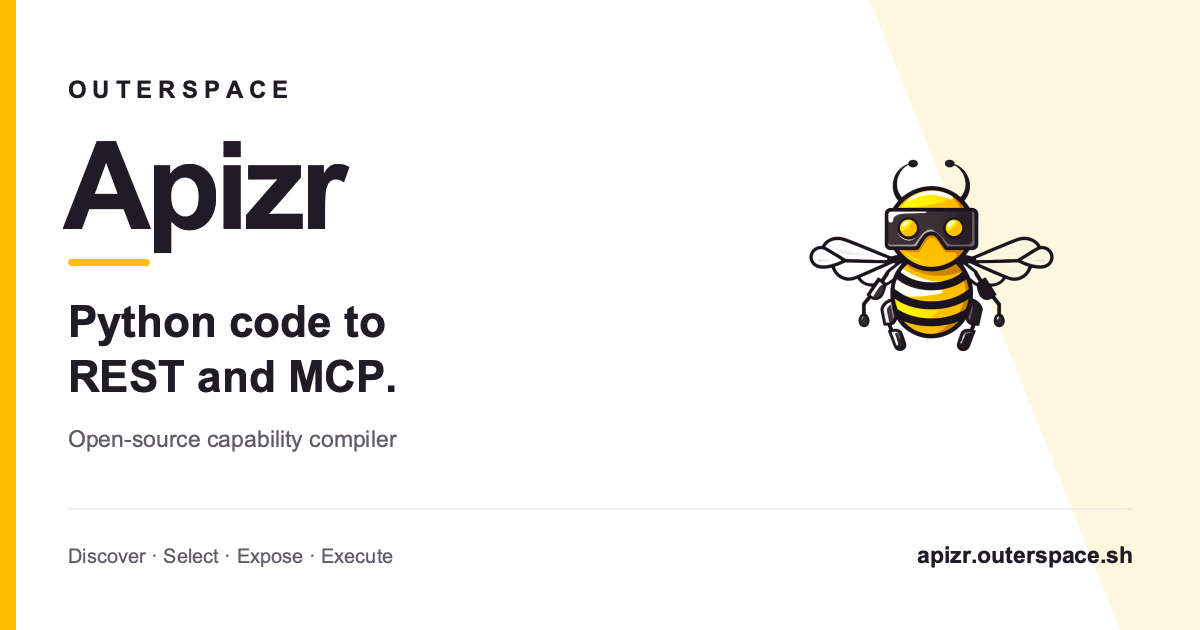
The site serves a static 1200 × 630 PNG at
assets/images/social-card.png. All pages include
Open Graph metadata and a Twitter large-image card in their HTML
head, with the page title, description and absolute canonical URL. The homepage uses
the same metadata through its custom layout. Crawlers do not need JavaScript, cookies
or an authenticated request to read the metadata or image.
After deployment, verify the homepage and a nested documentation URL, then use LinkedIn Post Inspector for links that LinkedIn has already cached. Other networks also control their own preview caches.